
Uncertain by Design · Essay 1.1.6
Strengthening Sovereignty over Your Own Point of View
We have plenty of solutions to manipulation. But does anyone believe the problem is solved?
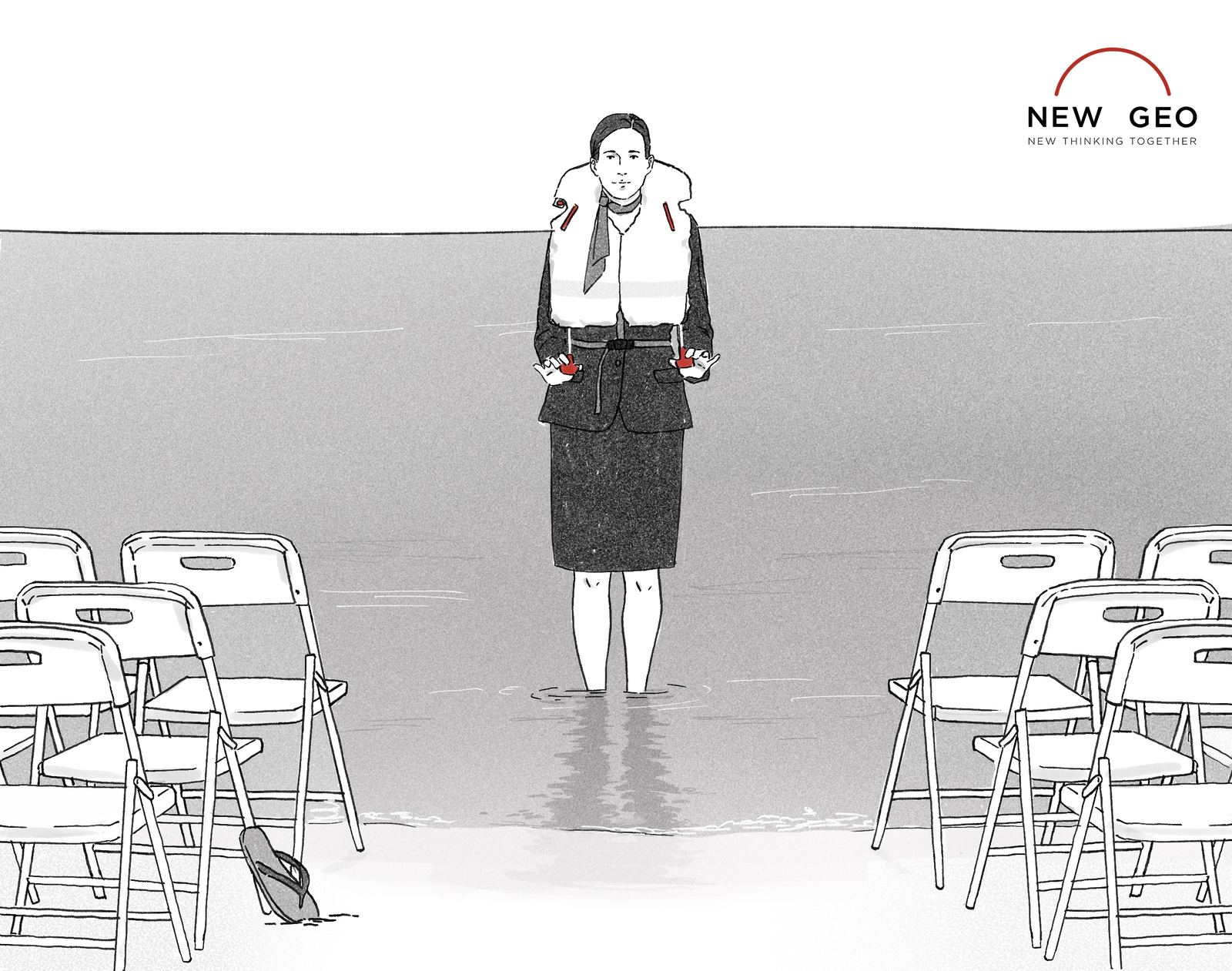
Ultimately, the true battleground isn’t platforms. It’s people.
We’ve spent the last two posts probing upstream and downstream: verifying what’s real, then tracing how it spreads.
Now we arrive at the third site of solutioneering: between our own ears—how we, as consumers of information and as citizens, sort what serves us from what’s manipulating us to serve others.
What’s one habit that’s made you harder to manipulate—and how sure are you that it’s working?
Shoring up the first line of defence
Strengthening sovereignty over one’s own point of view starts with awareness of how others try to seize it.
Across democratic countries that value a “free press”, media literacy is gaining prominence in school curricula. In Finland, which is next door to Russia, it’s become a cornerstone of national security. Every Finnish schoolkid learns to ask three questions—Who’s behind it? What’s the evidence? What do other sources say?1—not as a stand-alone module, but as a habit of critical thinking that’s embedded into the pedagogy of every subject.
Mike Caulfield2, author of the SIFT method3 (Stop, Investigate the source, Find other coverage, Trace back to the original), is tackling the problem of misinformation that’s hidden in AI-generated chat responses. “One thing that has shifted: as people start to share generated text through LLMs, they’re not just sharing a single fact or image. They’re often sharing something quite extensive that has a lot of facts embedded in it that haven’t been checked by anybody…[T]he ability to push a button and generate five pages of text that no human has fact-checked yet fundamentally shifts things.” One of his practical contributions is to continuously test and improve a free prompt4 that we can all paste into our LLM conversations, so that the model comes to better conclusions, hallucinates less, and makes plain when conflicting perspectives exist.
Meanwhile, across the Global South, where misinformation often spreads via WhatsApp, NGOs and media organizations have developed WhatsApp-based bots5 and literacy workshops to teach people to pause, think, verify veracity before forwarding messages and images from one chat group to another. (Check out the work by Digify Africa6 and its founder, Gavin Weale.)
Other frontline initiatives are building off insights from psychology, especially inoculation theory. This is the idea that pre-bunking—deliberately exposing us to weak doses of misinformation as a way to teach us the manipulative tactics of bad actors—might bolster our immunity to falsehoods in the wild.
Academic psychologists have packaged inoculation theory into interactive games like Bad News, Harmony Square, and Cranky Uncle7. They’re all variants of the same concept: to let us play the role of bad actor. Along the way we learn their tactics for grabbing eyeballs and gaining followers (playing on emotions, impersonating credible experts, pushing conspiracies), so that we ourselves become more “foolproof”.
“With the best algorithms in the world—and I know how powerful these algorithms are—we cannot protect people from encountering potentially harmful information, so we have to invest in their resilience” (Yasmin Green, CEO, Jigsaw (Google’s counter-disinformation arm))8.
Building stronger truths together
The next layer of cognitive defence is social.
This solution space is about rebuilding common knowledge from the ground up, by putting us in rooms where we: meet difference in the flesh; recognize interests and goals that, despite our differences, we do share in common; and grapple together with the information and the choices that might help us improve the situation we all find ourselves in.
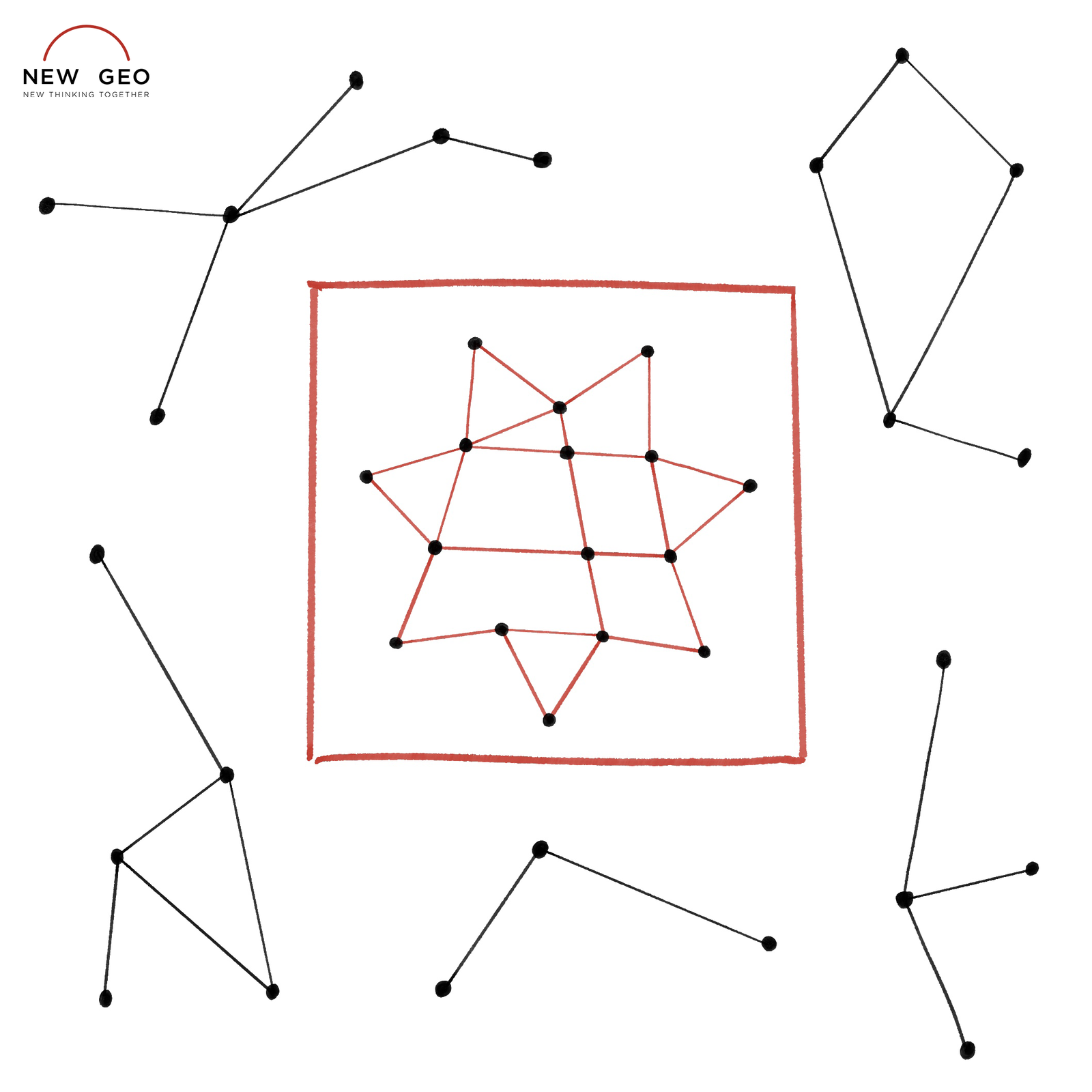
Many of these efforts are state-led. Ireland assembled citizens to weigh in on constitutional questions of same-sex marriage and abortion. France convened national assemblies to inform climate policy; over 400 municipalities run open-vote participatory budgets9. (Participatory budgeting brings citizens into the room where the sausage gets made, so that they experience themselves the pain of choosing which critical investments and essential services to under-fund, given the finite resources available.)
Other social solutions are more grassroots or instigated by prominent academics and organizations. g0v, a civil society movement in Taiwan, established vTaiwan as a neutral, public deliberation platform for crowdsourcing diverse opinions, reaching a rough consensus, and recommending new bills to Taiwan’s legislature. So far, it has helped shape public laws and regulations on issues ranging from ridesharing to easing regulatory burdens upon startups and small companies10.
James Fishkin11, director of Stanford University’s Deliberative Democracy Lab, has pioneered citizen-centric techniques for the US. He co-organized America in One Room, a high-profile 2019 experiment that brought a representative sample of 500 Americans together before the 2020 election to deliberate on immigration, the economy, foreign policy, health care, and the environment. The results were an uplift in participants’ knowledge and a softening of partisan animosity.
As Fishkin explained in a 2025 podcast with Francis Fukuyama12, “America in One Room was just a demonstration and a scientific experiment. And we’ve now done a whole series of them.” And what did they demonstrate? “We can improve. People increase in empathy for each other. People learn to listen to each other. We can create a more deliberative society…even in this age of social media and disinformation.”
So, we’re good?
Across the full “value chain” of knowledge—its creation, distribution, and reception—some of the world’s best, brightest, and most committed people are striving to shore up our shared reality before it collapses completely. They are striving to make the difference between what’s been verified and what’s viral more apparent; to make that difference matter more to how the systems work; to make that difference matter more to us; and to make us better collaborators around what we think we know.
We have plenty of solutions. But does anyone believe that the problem is solved?
Until next time…
Next time: hard truths. Fighting back is not the same as winning—and the people working hardest to defend our shared reality are outmatched.
This time, as a prelude, I wonder: Do you feel more vulnerable to manipulation than you did five years ago—or more resilient?
(Reply here or email a short story: ubd@newgeo.org)
Faktabaari EDU – “Digital Information Literacy Guide” (Faktabaari, 2022); Kari Kivinen – “In Finland, We Make Each Schoolchild a Scientist” (Issues in Science and Technology 39(3), 2023); Saara Salomaa & Lauri Palsa – “Media Literacy in Finland: National Media Education Policy” (Ministry of Education and Culture 2019:39, 2019). ↩︎
Stefanie Panke & Mike Caulfield – “‘AI is less like programming and more like spreadsheets’: An Interview with Mike Caulfield About Deep Background, AI Literacy and Future Skills” (AACE Review, 2025). ↩︎
Mike Caulfield – “SIFT (The Four Moves)” (Hapgood, 2019). ↩︎
Mike Caulfield – Deep Background: A Tool That Shows a Different Way to Use LLMs (checkplease.neocities.org, 2025). ↩︎
Cristina Tardáguila – “‘What’s Crap on WhatsApp?’ is the winner of the 2019 Fact Forward Fund” (Poynter / International Fact-Checking Network, 2019); Meedan – “One year of running the WhatsApp End-to-End Fact-Checking project” (Meedan, 2022). ↩︎
Digify Africa – Kitso Learning Bot (digifyafrica.com, 2021). ↩︎
Jon Roozenbeek & Sander van der Linden – “Fake news game confers psychological resistance against online misinformation” (Palgrave Communications 5, art. 65, 2019); Jon Roozenbeek & Sander van der Linden – “Breaking Harmony Square: A game that ‘inoculates’ against political misinformation” (Harvard Kennedy School Misinformation Review, 2020); John Cook and colleagues – “The cranky uncle game—combining humor and gamification to build student resilience against climate misinformation” (Environmental Education Research 29(4), 2023); William J. McGuire – “Inducing Resistance to Persuasion: Some Contemporary Approaches” (Advances in Experimental Social Psychology, vol. 1, 1964). ↩︎
Yasmin Green – “Remarks on the panel ‘Democratic Resilience and a New Economic and Social Contract’” (Atlantic – Black Sea Security Forum (Aspen Institute Romania and the German Marshall Fund), Bucharest, 2022). ↩︎
Convention on the Constitution (Ireland) – “Third Report: Amending the Constitution to provide for same-sex marriage” (Convention on the Constitution, 2013); The Citizens’ Assembly (Ireland) – “First Report and Recommendations of the Citizens’ Assembly: The Eighth Amendment of the Constitution” (The Citizens’ Assembly, 2017); Gouvernement de la République française – “Projet de loi n° 3875 portant lutte contre le dérèglement climatique et renforcement de la résilience face à ses effets, exposé des motifs” (Assemblée nationale, 2021); Antoine Bézard – “Budgets participatifs : un outil démocratique qui donne davantage de pouvoir aux citoyens des grandes villes” (Fondation Jean-Jaurès, 2024). ↩︎
Yu-Tang Hsiao & Shu-Yang Lin & Audrey Tang & Darshana Narayanan & Claudina Sarahe – “vTaiwan: An Empirical Study of Open Consultation Process in Taiwan” (SocArXiv preprint, 2018); Julie Simon & Theo Bass & Victoria Boelman & Geoff Mulgan – “Digital Democracy: The tools transforming political engagement” (Nesta, 2017); Chris Horton – “The simple but ingenious system Taiwan uses to crowdsource its laws” (MIT Technology Review, 2018). ↩︎
James Fishkin & Alice Siu & Larry Diamond & Norman Bradburn – “Is Deliberation an Antidote to Extreme Partisan Polarization? Reflections on ‘America in One Room’” (American Political Science Review 115(4), 2021); Center for Deliberative Democracy, Stanford University – “America in One Room: Executive Summary” (Deliberative Democracy Lab, 2019). ↩︎
Francis Fukuyama & James Fishkin – “Jim Fishkin on Deliberation and Democracy” (Frankly Fukuyama podcast, Persuasion, 2025). ↩︎