

Compass
An extended programme for senior teams. The deliberate practice of reckoning together.

Why you need a compass
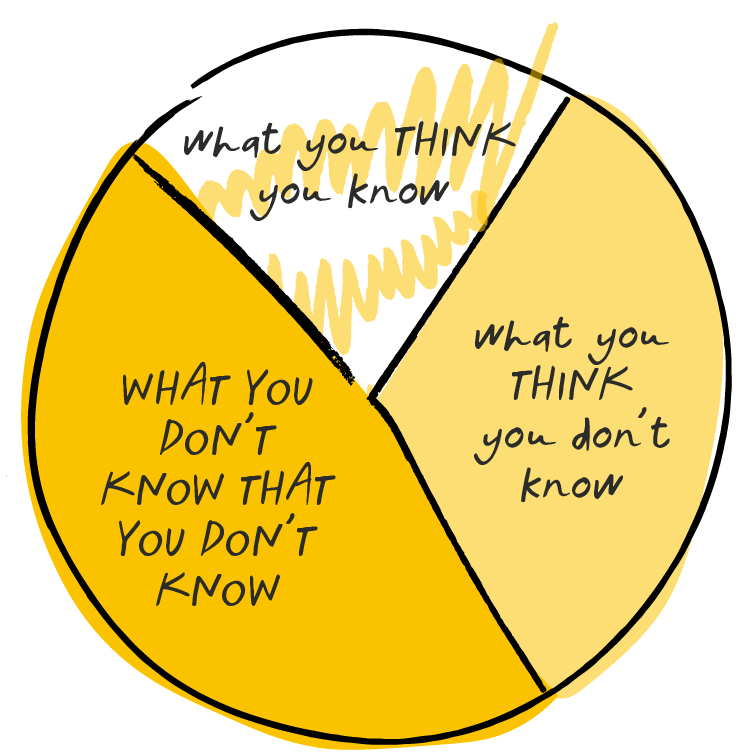
Most leadership development is missing the muscle that matters now: the ability to take a serious provocation from outside the team’s frame — a thinker carrying difficult signal, a perspective the team doesn’t already hold — and stay with it. Long enough to translate it into how the team decides and acts differently.
The real practice — letting genuine challenge in without rushing to reject it or assimilate it into what we already believe — happens in the rhythm of months, not in the compression of a weekend retreat.
Compass is built for that. An extended programme that brings serious thinkers into deliberate engagement with your leadership circle, then creates the time and structure to work through what each provocation means for the team’s actual work. Three milestone gatherings. A year-round dialogue with thought partners. Personal scaffolding for individual reflection, peer accountability, and the steady accrual of capacity that comes from doing the work together long enough that it becomes the work.
What Compass is
An extended learning partnership convened by New Geo for a senior team that’s ready to develop, together, the capacity to lead through complexity.Three components shape a Compass programme:
A Basecamp arc
Three milestone gatherings across the year, each one an immersion with a guest thinker standing at the frontier of your c-suite agenda.
Basecamp is a place for reckoning together: it is where the programme’s frameworks meet leaders’ actual work and where the circle’s collective practice deepens.
A year-round dialogue with thought partners
Typically six to ten custom conversations across the year with thinkers, authors, peers, and practitioners bringing provocations from outside the team’s frame. Drawn from across leadership, foresight, complexity, geopolitics, technology, and inner work. Delivered between Basecamps in realtime and recorded formats, and digested together in 30-minute facilitated Campfires.
A personal scaffolding
1-to-1 reflection sessions with your New Geo learning partners, peer-to-peer check-ins among members of the circle, and a brief weekly self-reflection rhythm.
The infrastructure that makes the practice deliberate.
Compass is commissioned by an organization for a defined leadership circle. Group sizes typically run between six and twenty-four leaders, drawn from a single team or carefully composed across functions.
The shape of a year
A typical Compass year unfolds across four phases:

Launch (Month 0)
A virtual session that introduces the programme architecture, surfaces the circle’s collective intent, and sets the rhythm for the year. The first invitation to reckon together.

Months 1-4
Basecamp 1 — the first full-day immersion, anchored by a guest thinker bringing a serious provocation. Followed by the first round of thought-partner provocations, supported by 1-to-1 reflection sessions and peer check-ins.

Months 5-8
Basecamp 2 — building on what the first months surfaced. Provocations deepen into whichever terrain matters most for the circle: geopolitical shifts, regulatory pressure, technological disruption, the inner work of leadership under sustained strain. Mid-year individual and peer reflection. By this point, the practice rhythm carries into daily work.
Months 9-10 and Year-in-Review
Basecamp 3 — the integrative immersion, pulling threads together and clarifying what each leader is taking forward into their next year. Closing with a Year-in-Review session that captures the circle’s collective learning and the personal practice each leader has built.
The architecture is steady; the content is bespoke.
What participants leave with
By the end of a Compass year, leaders typically leave with four things.
Strengthened capacity to make new maps
They’ve spent the year engaging seriously with thought partners who challenge what they see. They know how to listen for perspectives they don’t already hold, and how to work as a team to figure out the judgment upgrade. The practiced muscle of asking what does this mean for us? — and staying with it long enough to find out.
A senior team that’s reckoned together
The circle has surfaced the assumptions each leader was quietly bringing to shared decisions. They’ve developed a more honest collective view of the challenges they face — and the trust that comes from having sustained that conversation across a year, with serious provocations brought into the room.
A personal practice that survives the programme
Each leader leaves with their own continuing rhythm of reflection — wise actions to keep practicing, frameworks they’ve made their own, and reflexes they’ve begun to embody.
Deeper relationships across the team
The 1-to-1 sessions, the peer check-ins, and the three Basecamps build durable bonds. Senior teams that complete Compass typically report a heightened, shared tolerance for frankness and uncertainty.
A braided stream of practices
Compass integrates five serious traditions of leadership thought into a single year-long practice. Its lineage is deliberate and visible.
Drawing on Glenda Eoyang’s Human Systems Dynamics work, the What? So what? Now what? framework gives leaders a structured way to make sense of complexity and choose responses in real time. Practiced in the circle’s work as wise actions — small, specific commitments that test new patterns week by week.
The work of scenarios (from Pierre Wack, Shell), horizon scanning (Bill Sharpe, IFF), tracing weak signals and ripple effects help leaders to imagine alternative futures alongside thought partners.
From Ronald Heifetz and the Cambridge tradition: the distinction between technical and adaptive challenges, and the leader’s work of holding the team in disequilibrium long enough for genuine learning and change to occur.
From Robert Kegan and Lisa Lahey: the structured surfacing of the personal beliefs and commitments that quietly resist a leader’s own stated intentions. The work of seeing what’s hidden in plain sight.
Drawing on multiple traditions — from generative listening to the convening practices described in How to Basecamp — the discipline of convening the mix that’s missing and asking questions that open territory rather than close it.
Compass doesn’t claim to invent these traditions. It commits to integrating them, with rigour, into the rhythm of a year so that a single practice flows.
When this is the right work
Compass is a learning partnership for c-suite executives — or for the next layer below, where those who translate decisions into action need their own deliberate practice.
Signals that this is the right work:
Your team is facing the kinds of sustained strategic uncertainty — geopolitical, technological, regulatory, cultural — that require not just better information but a stronger capacity to metabolize challenging perspectives over time.
You want a learning partnership that brings serious external thinkers into deliberate engagement with your team — not as one-off keynote speakers, but as sustained provocations the team works through together over a year.
You’ve tried shorter leadership development engagements (an offsite, a 5-day intensive) and felt the value dissolve away within weeks.
You’re prepared to invest across a sustained period, not a compressed week.
The methodology builds a deliberate practice of getting better at the work that doesn’t come with a playbook — the work of judgment, adaptation, and reckoning together.
Reference engagements
The leadership circle: a global group of twenty executives responsible for a critical function’s adaptation through a period of sustained external pressure.
The circle ran through Compass’s standard full-year architecture: three Basecamps, year-round custom content, individual and peer reflection. By mid-year, the What? So what? Now what? framework had become standard practice in their regular meetings. By year-end, their function had developed shared language around adaptive leadership, established a rhythm of wise actions embedded in their weekly work, named several systemic patterns the team had been quietly suffering for years, and was recognized internally for bringing advanced sense-and-respond capabilities into the business.
The cohort: a global group of 24 leaders carrying responsibility for translating the senior team’s decisions into action across the broader business.
The cohort ran the same year-long architecture, calibrated across four Basecamps to their distinct rhythm and the breadth of geographies represented. By mid-year, the What? So what? Now what? framework was structuring how leaders convened conversations on the hardest cross-regional challenges. By year-end, the cohort had shifted from a posture of fixing problems for their teams toward asking better questions that empower them, learned to treat written briefings as the start of cross-functional conversation rather than the end of it, and reported a deepened sense of global cohesion across what had previously felt like regionally-isolated issues.
Together, the two circles built the function’s capacity to reckon at two levels at once.
How to begin
Every Compass programme begins with a conversation about the senior team you’re commissioning for and the moment they’re navigating.
Reach out below to begin. You will receive a thoughtful response within a week.