

From Verifiable to Viral and the End of Common Sense
Social feeds now reward reach over proof; “truth” spreads by uptake, not evidence. In an increasingly performative world, how can you make rooms that think?
Reality bends to new rules, now
The hummmmm of the old truth-machine has been replaced – online, by shouts on social media and at home, by silent hidden nodding-along on increasingly personalized me-dia.
“The medium is the message,” the media theorist Marshall McLuhan famously wrote. Today, his meaning is clear. We’re seeing first-hand how what we know gets transformed by how we know it.
Truth is what’s viral, not what’s verifiable.
Social media has turned “truth” into something that anyone can generate simply by getting enough other people to repeat it. This alternative method of validation is not scientific, but social—not “how well does this make sense of the world?”, but “how well does this influence and coordinate online discourse?” [1].
Truth is tribal.
Back in the mass media age, to spout views far outside the mainstream—unsupported by any accepted standards of legitimacy—was a quick path to social isolation.
Now, “mainstream” has become a pejorative to many. It means “unliberated”. It means “confined to the rules that institutions and experts have set themselves to maintain their monopoly over your own knowledge and beliefs”.
The new formula for making truth has shattered that monopoly. It has unleashed an industry of epistemic entrepreneurs, busily building homes for every refugee from orthodoxy. And it has shattered the public trust that mainstream media once enjoyed by reframing it as a mechanism of oppression and indoctrination.
To refute the mainstream now leads not to isolation, but inclusion. Attacking its temples and priests affirms one’s own enlightenment. To be rejected by them signals to us your readiness for entry into our circle of trust.
The common good is what’s left over.
“Common ground” is whatever remains after subtracting the terrain that’s now become a battlefield.
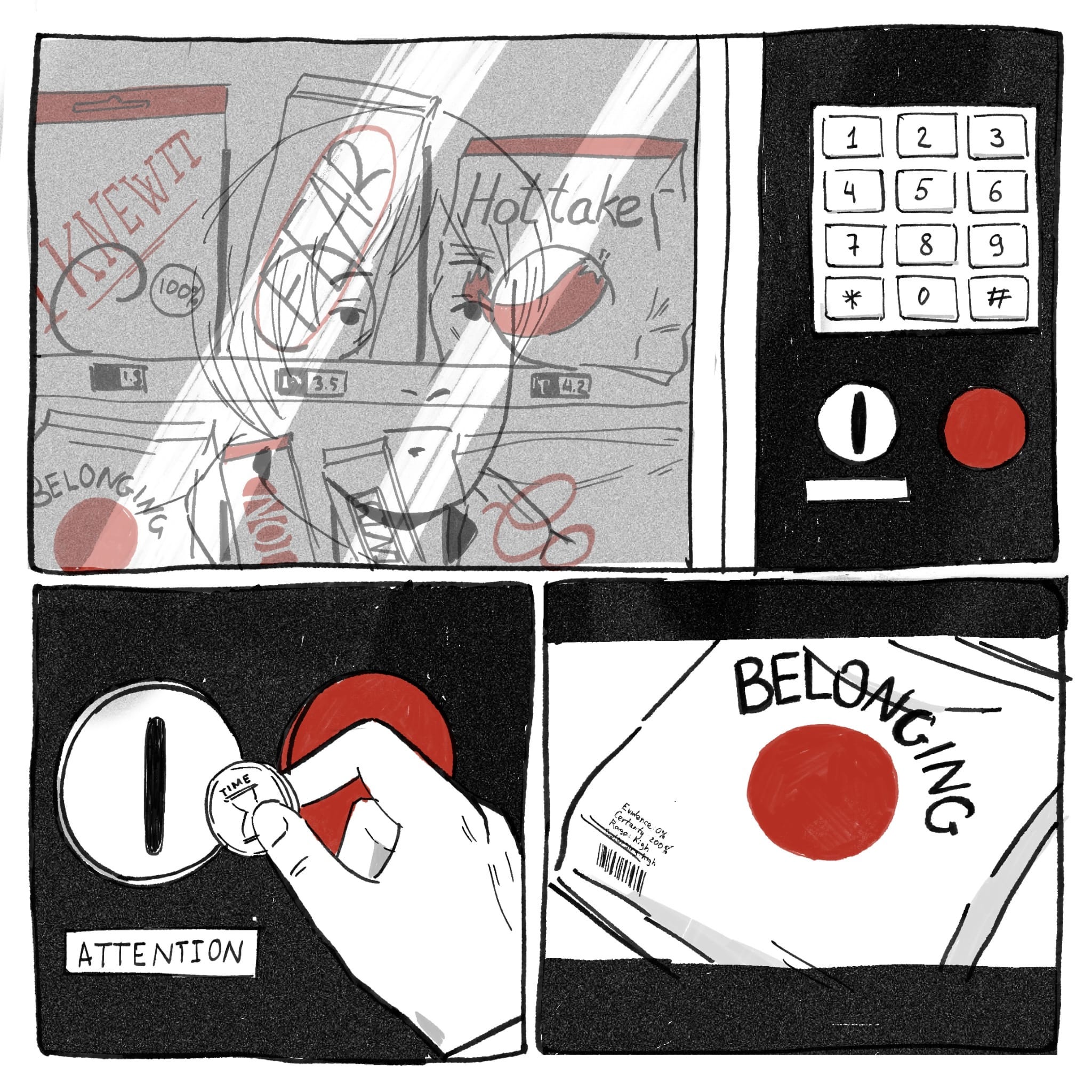
Shared stories. Common cause. Public interest. These are not dry concepts; they are vital forces that bind successful democracies [2]. But for pure entertainment value, they cannot compete with the funhouse that our relationship with reality has become, now that everyone has their own confirmation bias vending machine to feed each of us whatever we privately suspect is true [3].
Why would I ever accept inconvenient truths, when it is now possible to cherry-pick alternative information on any subject that confirms my personal views and affirms me within my social group?
Common ground, it turns out, is very easy to raze and very hard to restore.
The ledger of harms keeps getting longer
Leading researchers across society, science, and politics are busily linking new dysfunctions they’re seeing in their own domain to the collapse of common knowledge.
Individuals, siloed
We are social beings. The whole history of our species—and the accumulated evidence of psychology, anthropology, and neuroscience—affirms that fact. And each of us has experienced, in our own lives, how our individual desires, emotions, plans, and values emerge through our associations with others.
Without a social dimension to life, we are incomplete. We become lonely, angry, scared. In extreme cases we commit suicide.
The collapse of common knowledge causes sickness to our social selves.
So long as “truth” is something about the reality bigger than ourselves, we need each other to grasp it. We need “genuine relationships with people who are genuinely other people,” to quote the philosopher Bernard Crick (1929-2008). In other words, we need to “accept the reality of other people, of how different other people are from you, of how they are no less complex and contradictory than you are” [4].
Accepting that reality is bigger than what I myself can know urges me into a collective effort with you: to find truth together. Since Aristotle, that has been the root argument why we should all get involved in the civic life of our community.
But this acceptance also safeguards my own mental health.
Without that searching together—if instead I get into a habit of grasping easier truths myself—my capacity to make genuine relationships with genuinely other people atrophies. I isolate myself in my own narrowness. A 2024 Harvard study found that two-thirds of lonely people feel disconnected not only from those around them, but also from their culture and country. In Europe, researchers found that lonely people are more likely to say that their voices don’t count and show lower levels of interpersonal trust.
The mass adoption of generative AI as a go-to source for information and conversation is accelerating this trend.
When we all live in our own hyper-personalized information feeds, each as unique as our own fingerprint, what happens to those social capacities upon which our wellbeing depends? Our ability to listen? To empathize? To accommodate? [5].
Science and common sense, stymied
Some of the harms being catalogued are individual. Others are societal in scope.
Science aims to uncover truths that are hard to ignore. We do live in a real world of causes that affect us whether we care to admit it or not. History shows that we do better, collectively, when we work with—rather than rebel against—those forces that, even though we can’t see them, are demonstrably real: gravity, germs, groupthink.
The mass-manufactured “truth-slop” we all now have to wade through risks rotting the whole project.
“Truth”, to serve any useful social function, has to speak to a bigger reality [6]. Instead, we’re shrinking its scope. And when we reduce truth all the way down to one’s own perspective, the difference between truth and a lie becomes simply a matter of perspective.
And truth becomes easy to ignore.
We can combat this erosion with good journalism, but the algorithms are tilted against quality controls. Misinformation grabs more eyeballs than the fact-check that follows [7].
We can combat this erosion with critical thinking, but the truth-slop is a deluge, and our individual capacity to sniff bullshit has limits. Our muscle of discernment does fatigue.
We’ve connected every brain on Earth to everything that’s known, but somehow we’re losing our common sense.
Until next time…
Next up, we’ll conclude this ledger with one harm that touches everything else: democracy’s decline. When common knowledge shrinks, governance wobbles…
For here and now, I’m curious…
- Where has “viral” replaced “verifiable” in your world?
- What’s a small conversation you might prompt next week to strengthen what counts as true?
This has been post #2 in the chapter Common Knowledge is Collapsing.
Share research: ubd@newgeo.org
Further Reading
[1] William Davies – Stupidology
[2] Jonathan Haidt – The Polarization Spiral
[3] Tom Nichols – The Death of Expertise
[4] Ezra Klein – This is how the Democratic Party Beats Trump
[5] Frank Landymore - Godfather of AI Predicts Total Breakdown of Society
[6] Jonathan Rauch – The Constitution of Knowledge
[7] Vosoughi, Roy, and Aral - The Spread of True and False News Online